Antioxidants & Catechins in Matcha: Simply Explained
Matcha is finely ground green tea, known for its intense green color, its fine, tart flavor, and its unique preparation. Anyone who looks more closely at matcha quickly encounters terms like antioxidants, catechins, EGCG, L-theanine, caffeine, or polyphenols.¹
But what do these terms actually mean? And why do they appear so frequently in scientific publications on green tea?
This article is about the natural composition of matcha, the special features of its cultivation, selected research on green tea, and why matcha is now so often mentioned in connection with self-care, rituals, and modern moments of enjoyment.
Table of Contents
- What are antioxidants?
- What are catechins?
- What is EGCG?
- What natural components does matcha contain?
- Why is matcha so intensely green?
- What distinguishes matcha from classic green tea?
- Green Tea in Research
- Matcha, Self-Care, and the Ritual of Preparation
- Conclusion: Matcha between Tea Culture and Modern Routine
- Sources
What are antioxidants?
Antioxidants is a collective term for various compounds found in many plant-based foods. These include, among others, certain polyphenols, which can also be present in tea, herbs, fruits, vegetables, and spices.¹
In connection with matcha, antioxidants are often discussed because green tea naturally contains various plant compounds. Matcha consists of finely ground green tea and thus contains components of the tea leaf in powder form.¹
Catechins are particularly often mentioned. They are among the characteristic plant compounds of green tea and have been the subject of scientific research for many years.¹ ³
What are catechins?
Catechins belong to the group of polyphenols. They occur naturally in green tea and are among the well-known ingredients when it comes to the composition of matcha.¹
Catechins in green tea include:¹
- Epicatechin, or EC
- Epicatechin gallate, or ECG
- Epigallocatechin, or EGC
- Epigallocatechin gallate, or EGCG
EGCG, in particular, is mentioned in many scientific papers on green tea. It is one of the catechins frequently studied in research.¹ ³
It is important to note: Catechins are natural components of green tea. Their exact amount can vary depending on the variety, cultivation, processing, storage, and preparation.³
What is EGCG?
EGCG stands for epigallocatechin gallate. It is a catechin that occurs naturally in green tea.¹
In scientific publications, EGCG is frequently studied in connection with green tea and matcha. This includes questions of composition, measurement methods, processing, or preparation, for example.¹ ³
Actual values can vary depending on the product. Factors such as tea variety, origin, cultivation method, shading, harvest time, processing, storage, and preparation influence the natural composition of tea.² ³
What natural components does matcha contain?
Matcha naturally contains various components of the green tea leaf. These include, among others:¹
- Caffeine
- Catechins
- EGCG
- L-theanine
- Chlorophyll
- other natural plant compounds from the tea leaf
A scientific review describes matcha as powdered green tea containing, among other things, theanine, caffeine, chlorophyll, and various catechins.¹
It is precisely this combination that makes matcha so interesting for many tea lovers: not as a single isolated ingredient, but as a finely ground tea leaf with a special color, texture, and preparation.
Why is matcha so intensely green?
The vibrant green color is one of the most striking features of matcha. It is closely related to its cultivation and processing.¹ ²
For high-quality matcha, tea plants are traditionally shaded before harvesting. Shading is one of the important cultivation practices for matcha and can influence various properties of the tea leaves. A study by Chen et al. investigated different shading levels and their impact on morphological, physiological, and biochemical characteristics of matcha green tea.²
The intense color comes from the finely ground green tea leaf. Depending on quality, variety, and processing, matcha can look different: from delicate green to intensely vibrant green.¹ ²
Processing also plays an important role in taste. Matcha is often described as finely tart, full-bodied, slightly grassy, or pleasantly creamy—depending on the variety, dosage, and preparation method.
What distinguishes matcha from classic green tea?
With classic green tea, the tea leaves are steeped in water and then removed. Matcha, on the other hand, is whisked with water as a powder or incorporated into drinks and recipes.¹
This distinguishes matcha not only visually but also in its preparation method. The fine powder is stirred or whisked directly and remains part of the beverage.¹
Matcha can be used in many ways:
- classically with water
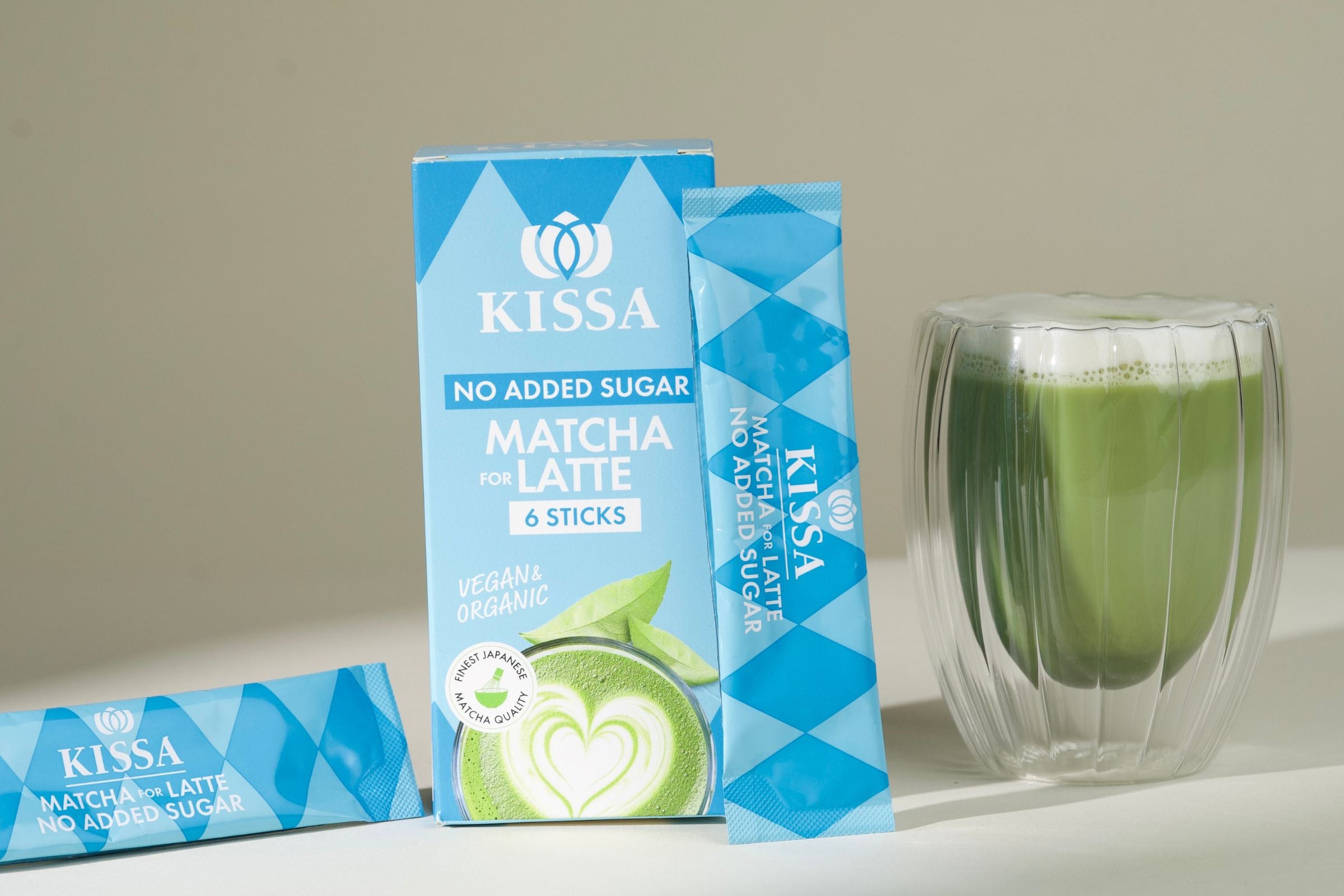
- as a Matcha Latte
- as an Iced Matcha Latte
- with plant-based milk
- in smoothies
- in desserts
- in ice cream
- in cakes, cookies, or bowls
It is precisely this versatility that makes matcha so popular today—from traditional tea preparation to modern recipe ideas.
Green Tea in Research
Green tea has been scientifically studied for many years. The focus is often on the polyphenols, catechins, and their occurrence in different preparations.¹ ³
Recent studies on commercially available green teas show that catechin composition, phenol content, and other parameters studied can differ depending on the type of tea and product. This is precisely why individual study values should always be considered in their respective context.³
Some human studies also deal with green tea polyphenols in connection with skin parameters. In a twelve-week human study, Heinrich et al. investigated green tea polyphenols and various skin measurements, including moisture, elasticity, microcirculation, and reactions to UV radiation.⁴
Another human study by Rhodes et al. posed a fundamental research question: Are catechin metabolites detectable in human skin tissue after green tea consumption? The researchers were able to detect certain catechin metabolites in skin tissue and skin fluid.⁵
A systematic review by Di Sotto et al. summarized clinical studies on oral green tea preparations in connection with skin issues. The authors classified the existing body of research and emphasized at the same time that results must always be considered in the context of the respective preparations, dosages, and study designs.⁶
This classification is important for readers: Such studies explain why green tea is scientifically interesting. However, they are not a general statement about every matcha product and do not replace individual medical advice.⁴ ⁵ ⁶
Matcha, Self-Care, and the Ritual of Preparation
Besides the ingredients, there's another reason why matcha is so fascinating to many people: the ritual.
Matcha isn't just steeped. The powder is sifted, mixed with water, whisked with a bamboo whisk, and then enjoyed pure or as a latte. These recurring steps make the preparation particularly mindful.
Rituals themselves are also a topic in psychological research. A review by Hobson et al. describes rituals as structured, repetitive actions examined from psychological, social, and cultural perspectives.⁷
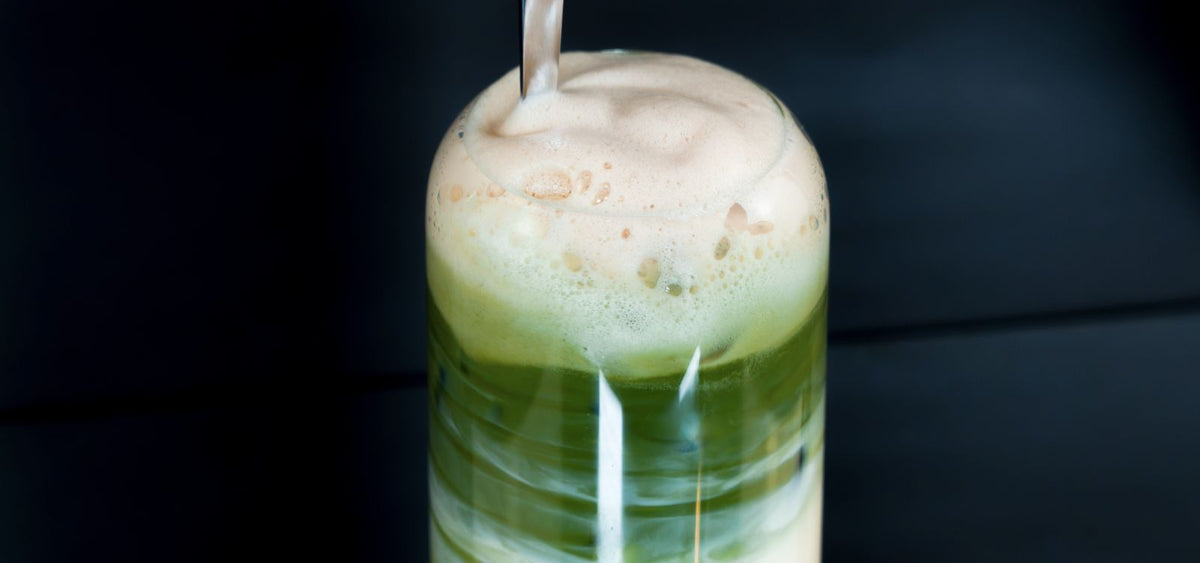
Perhaps that's why matcha fits so well into modern self-care routines. Not because of a single ingredient, but because of the moment: the vibrant green, the frothing, the creamy texture, the first sip.
Tea becomes a break.
Preparation becomes a small ritual.
A habit becomes a conscious moment of enjoyment.
Conclusion: Matcha between Tea Culture and Modern Routine
Matcha is finely ground green tea with a special color, a long tea tradition, and versatile uses. It naturally contains caffeine, catechins, EGCG, L-theanine, and other plant compounds from the green tea leaf.¹
Scientific works address the composition of matcha, catechins in green tea, cultivation practices like shading, and various research questions surrounding green tea preparations.¹ ² ³
For everyday life, matcha remains primarily one thing: a special tea moment. Whether classically with water, creamy as a latte, or as an ingredient in recipes – matcha brings color, flavor, and a small ritual into the day.
Sources
¹ Kochman, J., Jakubczyk, K., Antoniewicz, J., Mruk, H., & Janda, K. (2021). Health Benefits and Chemical Composition of Matcha Green Tea: A Review. Molecules, 26(1), 85. doi: 10.3390/molecules26010085
² Chen, X., Ye, K., Xu, Y., Zhao, Y., & Zhao, D. (2022). Effect of Shading on the Morphological, Physiological, and Biochemical Characteristics as Well as the Transcriptome of Matcha Green Tea. International Journal of Molecular Sciences, 23(22), 14169. doi: 10.3390/ijms232214169
³ Meyer, B. R., White, H. M., McCormack, J. D., & Niemeyer, E. D. (2023). Catechin Composition, Phenolic Content, and Antioxidant Properties of Commercially-Available Bagged, Gunpowder, and Matcha Green Teas. Plant Foods for Human Nutrition, 78, 662–669. doi: 10.1007/s11130-023-01121-2
⁴ Heinrich, U., Moore, C. E., De Spirt, S., Tronnier, H., & Stahl, W. (2011). Green tea polyphenols provide photoprotection, increase microcirculation, and modulate skin properties of women. The Journal of Nutrition, 141(6), 1202–1208. doi: 10.3945/jn.110.136465
⁵ Rhodes, L. E., Darby, G., Massey, K. A., Clarke, K. A., Dew, T. P., Farrar, M. D., Bennett, S., Watson, R. E. B., Williamson, G., & Nicolaou, A. (2013). Oral green tea catechin metabolites are incorporated into human skin and protect against UV radiation-induced cutaneous inflammation in association with reduced production of pro-inflammatory eicosanoid 12-hydroxyeicosatetraenoic acid. British Journal of Nutrition, 110(5), 891–900. doi: 10.1017/S0007114512006071
⁶ Di Sotto, A., Gullì, M., Percaccio, E., Vitalone, A., Mazzanti, G., & Di Giacomo, S. (2022). Efficacy and Safety of Oral Green Tea Preparations in Skin Ailments: A Systematic Review of Clinical Studies. Nutrients, 14(15), 3149. doi: 10.3390/nu14153149
⁷ Hobson, N. M., Schroeder, J., Risen, J. L., Xygalatas, D., & Inzlicht, M. (2018). The Psychology of Rituals: An Integrative Review and Process-Based Framework. Personality and Social Psychology Review, 22(3), 260–284. doi: 10.1177/1088868317734944