L-Theanine & Caffeine in Matcha: Simply Explained
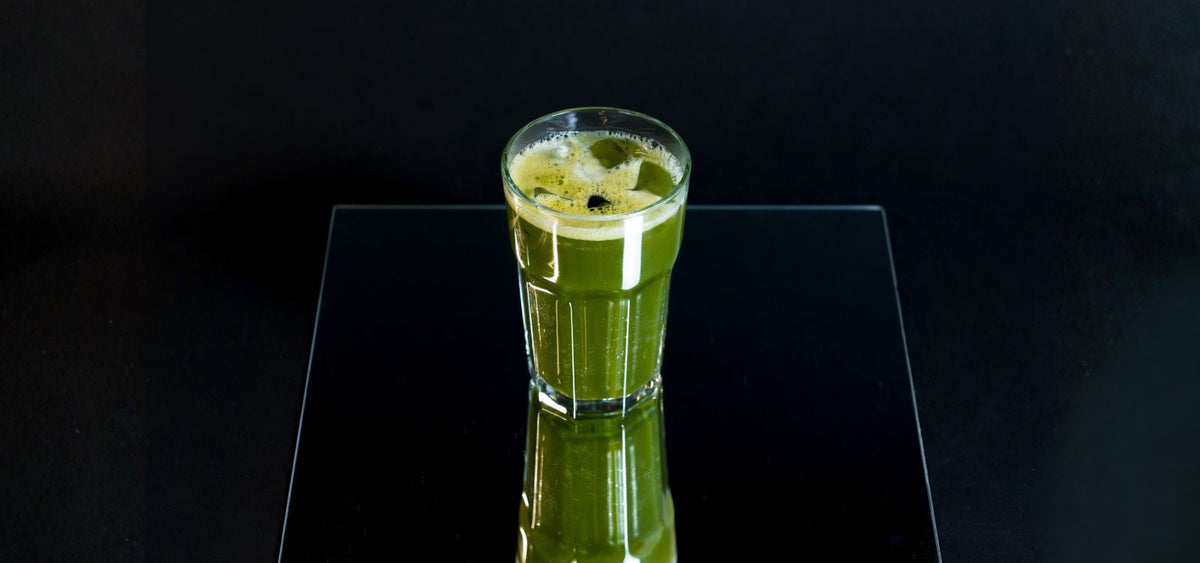
Matcha is finely ground green tea, known for its vibrant green colour, slightly bitter taste and special preparation. Anyone who takes a closer look at matcha will quickly come across terms like L-theanine or caffeine.
But what do these terms actually mean? And what makes matcha so special?
Table of Contents
- What is L-theanine?
- Does matcha contain caffeine?
- Why is matcha so green?
- The matcha ritual
- Conclusion
- Sources
What is L-theanine?
L-theanine is an amino acid that naturally occurs in tea leaves. Matcha also naturally contains L-theanine.¹
In scientific publications on tea, L-theanine is often discussed together with other components of the tea leaf, such as caffeine and catechins.¹ ³
What makes matcha special is its preparation. Unlike classic brewed tea, matcha is not steeped and then removed. Matcha is finely ground green tea that is whisked directly into water or used in drinks and recipes.
Does matcha contain caffeine?
Yes, matcha naturally contains caffeine.¹ The exact caffeine content can vary depending on tea variety, cultivation, harvest, processing, dosage and preparation.
This is one reason why matcha is often compared to coffee. However, matcha and coffee are two different drinks with their own origin, preparation and flavour profile.
Matcha does not have to be “better” or “healthier” than coffee to be special. It is a green alternative for lattes, iced drinks, recipes and small everyday moments of enjoyment.
Why is matcha so green?
The vibrant green colour is one of the most recognisable features of matcha. It is closely connected to cultivation and processing.
For high-quality matcha, tea plants are traditionally shaded before harvest. Shading is one of the important cultivation practices for matcha green tea and can influence different characteristics of the tea leaves.²
Taste is also shaped by variety, processing and preparation. Matcha is often described as slightly bitter, full-bodied, gently grassy or creamy.
The matcha ritual
Besides its ingredients, there is another reason why matcha feels special to many people: the preparation.
Matcha is mixed with water, whisked with a bamboo whisk and then enjoyed pure or as a latte. These small steps turn a drink into a ritual.
Rituals themselves are also a topic in psychological research. One review describes rituals as structured, recurring actions that are studied from psychological, social and cultural perspectives.⁵
Maybe that is part of matcha’s modern appeal: the vibrant green colour, the whisking, the creamy texture and the first sip.
Tea becomes a pause.
Preparation becomes a ritual.
A habit becomes a conscious moment of enjoyment.
Conclusion
Matcha is finely ground green tea with a long tradition, vibrant colour and many ways to enjoy it. It naturally contains caffeine, L-theanine, catechins and other plant compounds from the green tea leaf.¹
Whether prepared traditionally with water, enjoyed as a creamy matcha latte or used in recipes: matcha brings colour, taste and a small ritual into everyday life.
Sources
¹ Kochman, J., Jakubczyk, K., Antoniewicz, J., Mruk, H., & Janda, K. (2021). Health Benefits and Chemical Composition of Matcha Green Tea: A Review. Molecules, 26(1), 85. doi: 10.3390/molecules26010085
² Chen, X., Ye, K., Xu, Y., Zhao, Y., & Zhao, D. (2022). Effect of Shading on the Morphological, Physiological, and Biochemical Characteristics as Well as the Transcriptome of Matcha Green Tea. International Journal of Molecular Sciences, 23(22), 14169. doi: 10.3390/ijms232214169
³ Camfield, D. A., Stough, C., Farrimond, J., & Scholey, A. B. (2014). Acute effects of tea constituents L-theanine, caffeine, and epigallocatechin gallate on cognitive function and mood: a systematic review and meta-analysis. Nutrition Reviews, 72(8), 507–522. doi: 10.1111/nure.12120
⁴ Dietz, C., Dekker, M., & Piqueras-Fiszman, B. (2017). An intervention study on the effect of matcha tea, in drink and snack bar formats, on mood and cognitive performance. Food Research International, 99(Pt 1), 72–83. doi: 10.1016/j.foodres.2017.05.002
⁵ Hobson, N. M., Schroeder, J., Risen, J. L., Xygalatas, D., & Inzlicht, M. (2018). The Psychology of Rituals: An Integrative Review and Process-Based Framework. Personality and Social Psychology Review, 22(3), 260–284. doi: 10.1177/1088868317734944